





Washington restaurant tax, explained for the bookkeeper
Restaurants add service charges, sell food with utensils, deliver across city lines and file late like everyone else. This explainer walks a bookkeeper through the 18% large-party charge, the 75% rule, delivery sourcing and the late penalties, and shows how a small practice handles them in Sundry.
- 0:00 Is the 18% a tip?
- 0:24 The 75% rule
- 0:40 Delivery is taxed where the meal arrives
- 0:50 Late penalties
- 0:57 Restaurants in Sundry
- 1:13 A service restaurants will pay for
Transcript
Linh We add eighteen percent for big parties. That's the servers' tip, right?
Dana Not to the state. If the restaurant adds it, it's taxable.
Sal A tip the customer freely chooses isn't taxed. A charge the restaurant adds is part of the selling price, so it carries retail sales tax and retailing B and O.
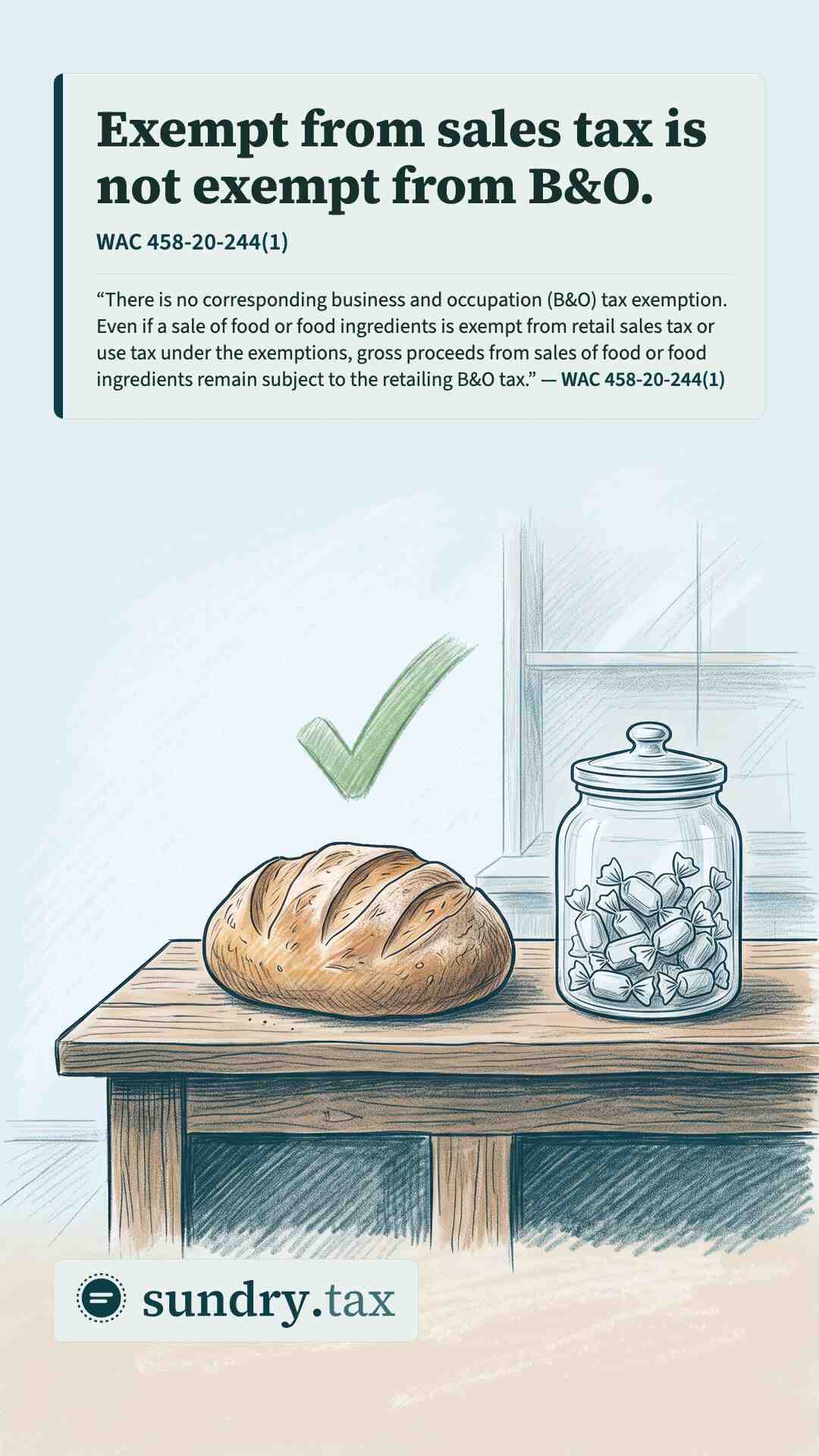
Sal If a seller makes utensils available and prepared food is over seventy-five percent of its food sales, its food is treated as sold with utensils, and taxed. Packages of four or more servings, sold as one item at one price, are the exception.
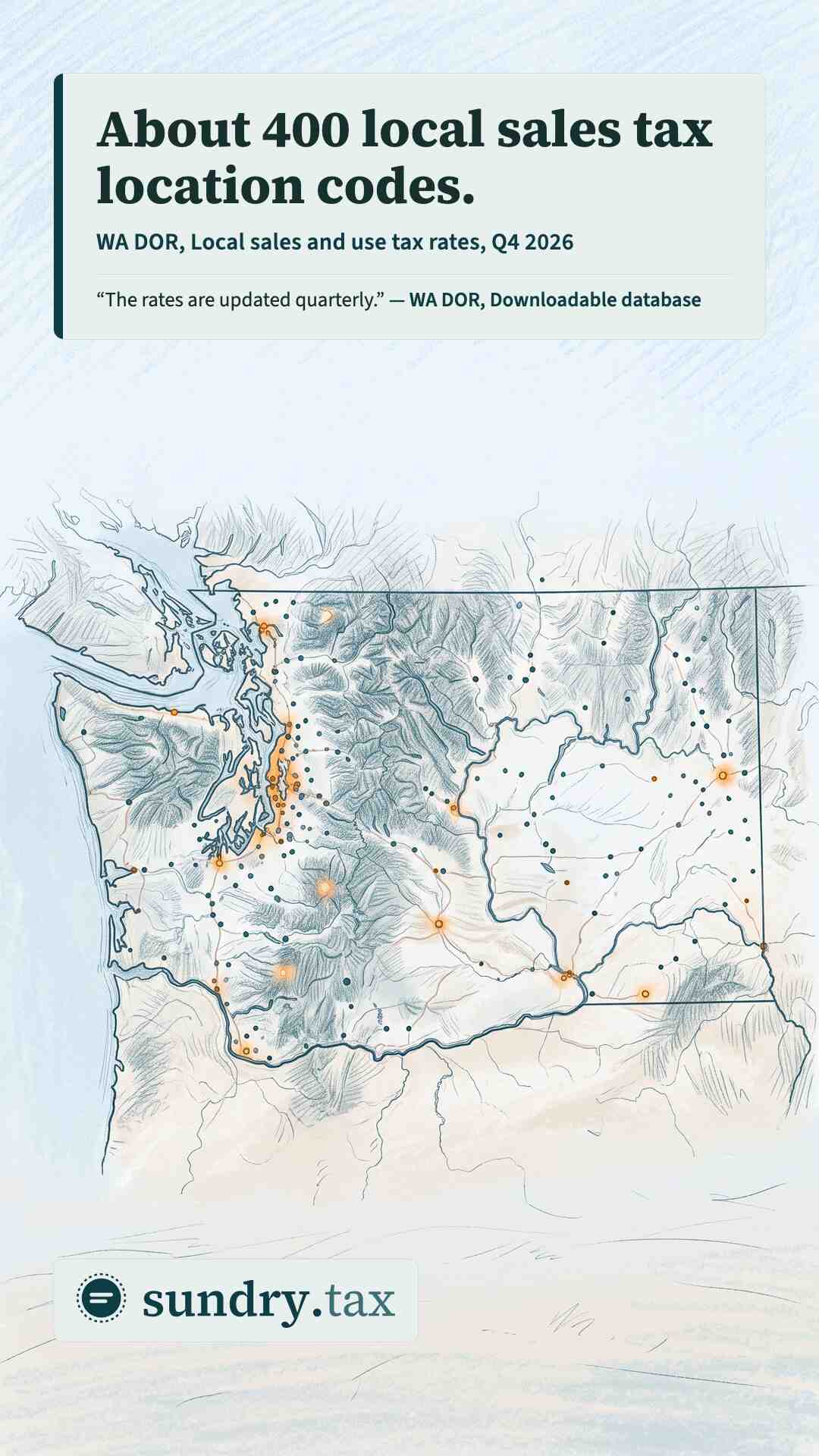
Sal Deliver a meal to another city, and the sales tax rate is the one where the meal arrives. Pickup is taxed where the restaurant is.
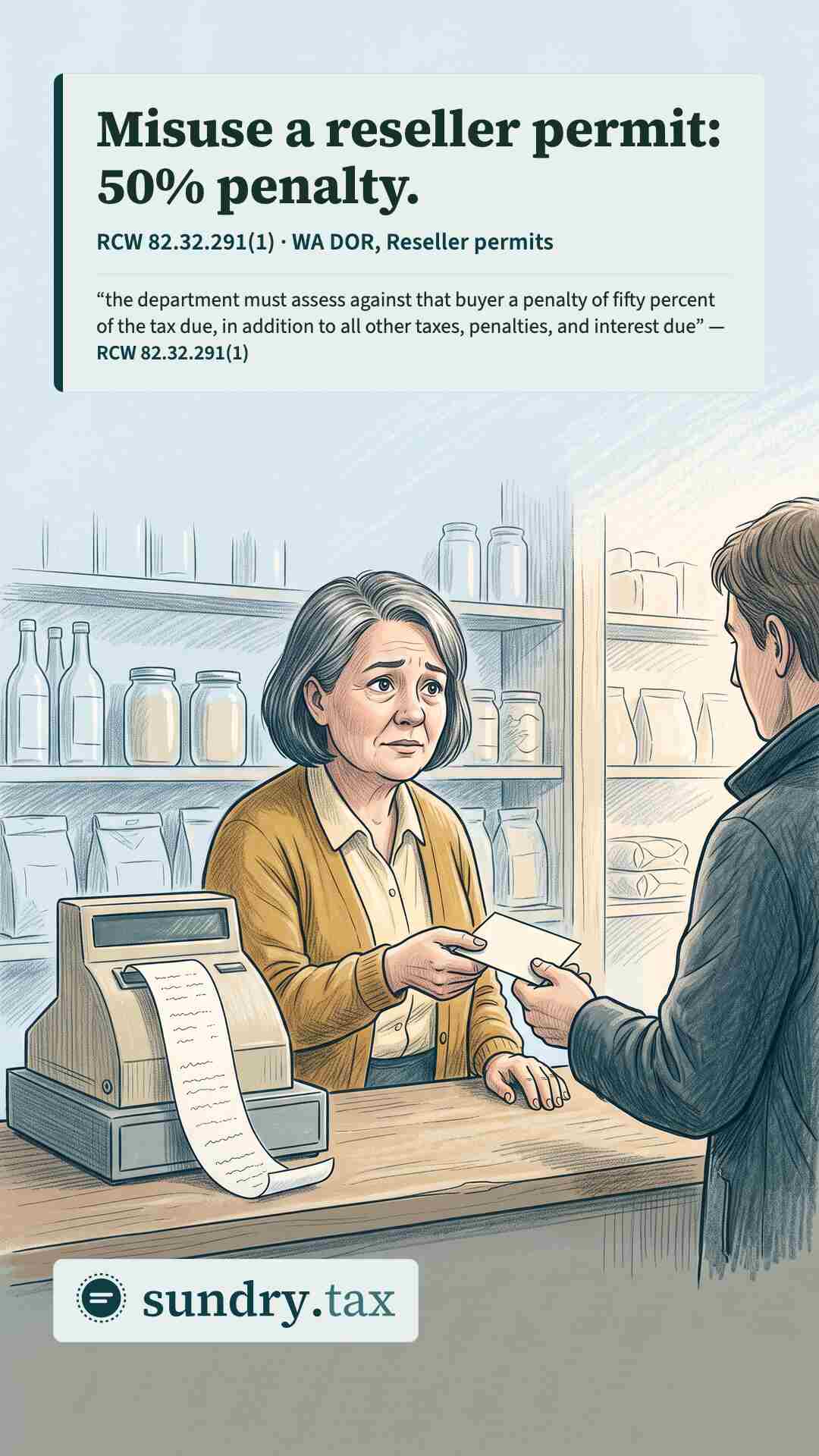
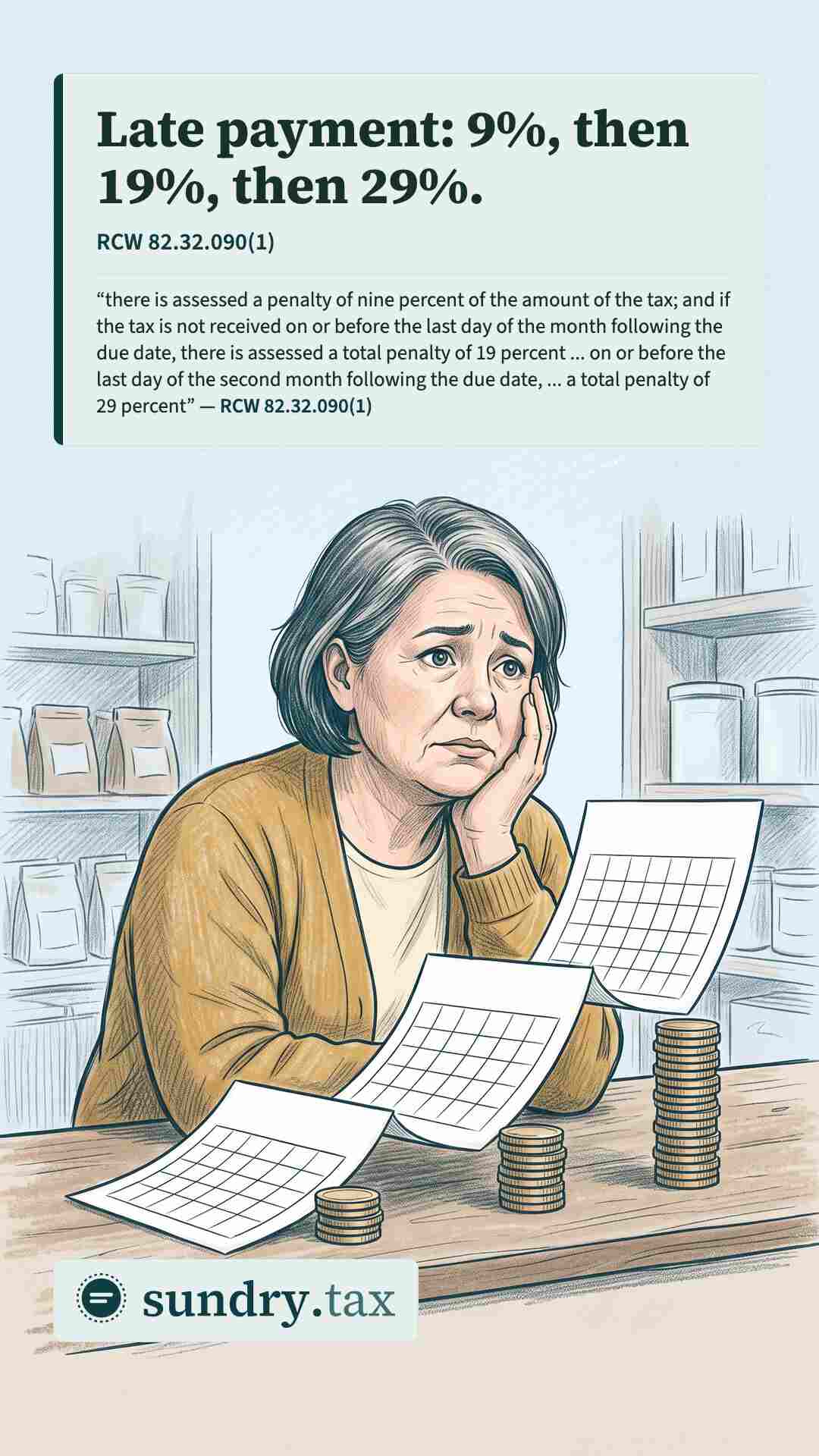
Sal Pay late, and the penalty runs nine, then nineteen, then twenty-nine percent in total.
Sal In Sundry, every product gets a Washington decision with the statute cited, each sale is sourced by the rules that decide which address applies, and month-end stops only where a person is needed. Then your client signs off on the Sundry Worksheet.
Dana Restaurants run on thin margins. Getting their tax right is a service they'll pay for.
Rory Restaurants run on thin margins and busy nights. Their bookkeeper shouldn't be doing this by hand.