REV 27-0032 · REV 27-0036
Anaerobic digesters and installation/repair services
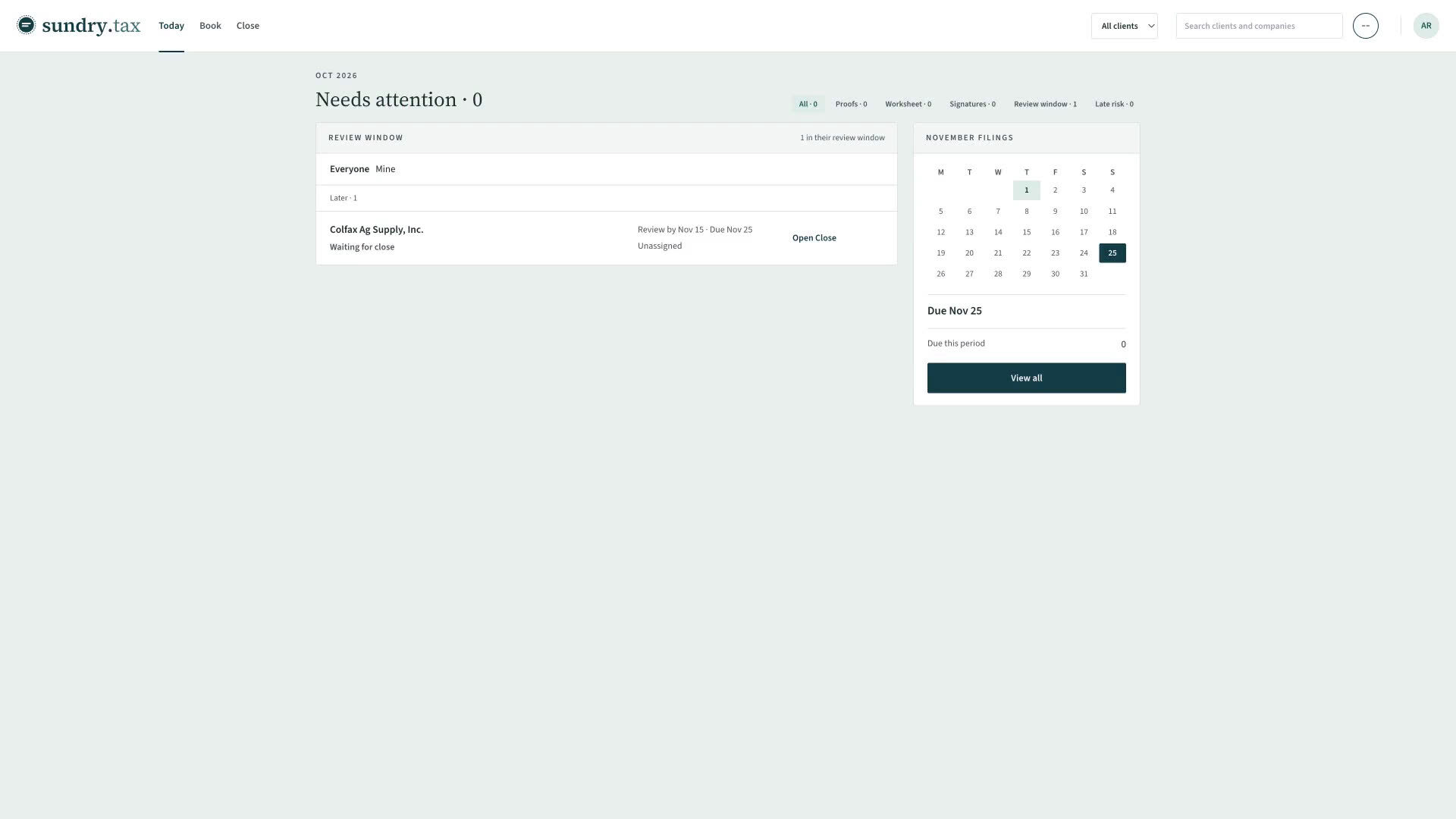
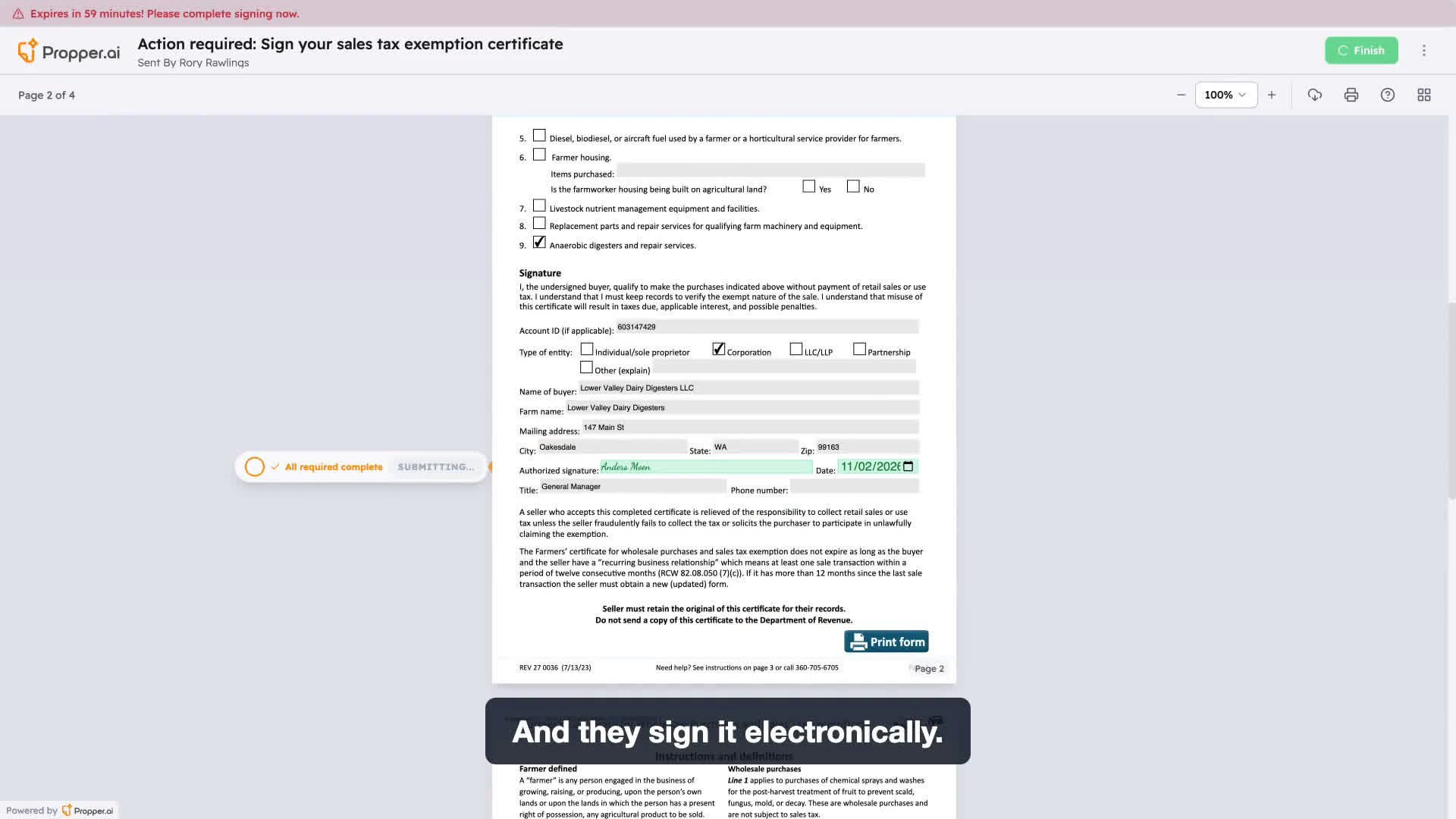
A firm asks a customer for this certificate, the buyer fills in and signs the form from the emailed link, and Sundry shows it signed and Verified by Sundry.
Buyer's certificate (REV 27-0032)
Farmer's certificate (REV 27-0036)
Anyone establishing or operating an anaerobic digester pays no Washington sales or use tax on property that becomes part of the digester, or on services to install, construct, repair, clean, alter or improve it. The digester can process any organic material, not only livestock manure. The preference expires January 1, 2029.
Who qualifies
- An "eligible person": anyone establishing or operating an anaerobic digester or a landfill, or processing biogas from either into marketable coproducts.
- Farmers and non-farm businesses alike. DOR lists farmers, owners and operators of digesters and landfills, and people who process biogas into marketable products.
- Since July 1, 2018 the digester no longer has to be used primarily (more than 50 percent) to treat livestock manure.
What qualifies
- Tangible personal property that becomes an ingredient or component of the anaerobic digester.
- Services to install, construct, repair, clean, alter or improve the digester.
- The digester itself: a facility that turns organic material into biogas and digestate with microorganisms in a closed, oxygen-free container.
- The "anaerobic digester" also includes the equipment to process its biogas or digestate into marketable coproducts, such as biogas conditioning, compression, nutrient recovery and electrical generation equipment.
- A separate branch of the same statute, RCW 82.08.900(1)(a), covers equipment that processes landfill biogas into marketable coproducts, and services on it. Form line 5y covers it too.
Not covered
- Purchases that neither become an ingredient or component of the digester nor are services to install, construct, repair, clean, alter or improve it.
- Purchases by someone who is not establishing or operating a digester or landfill or processing its biogas.
- Purchases on or after January 1, 2029, when the 2018 preference expires under RCW 82.32.805(1)(a), unless the legislature extends it.
What the buyer gives
Either of two DOR forms. Non-farm owners and operators use the Buyer's Retail Sales Tax Exemption Certificate, form REV 27 0032 (6/17/25), line 5y: "Anaerobic digesters and repair services." The buyer ticks single use or blanket (blanket works while buyer and seller have at least one sale within 12 months), enters the seller's name, mailing address and the date, checks the line named below, lists the items purchased, and completes the certification block: type of entity, type of business, Account ID, buyer name and title, street address, and signature. The form says it is not for resale purchases. Farmers may instead use the Farmer's Certificate for Wholesale Purchases and Sales Tax Exemptions, form REV 27 0036 (7/13/23), line 9 ("Anaerobic digesters and repair services"), with Account ID, type of entity, buyer and farm name, mailing address, authorized signature, title, phone and date. DOR accepts either form. DOR's Renewable Energy/Green Incentives entry also asks buyers to complete the buyer's sales and use tax preference addendum in My DOR when filing excise tax returns. No Annual Tax Performance Report is required. RCW 82.08.900(2): "A person claiming an exemption under this section must keep records necessary for the department to verify eligibility."
What the seller keeps
RCW 82.08.900(2): "Sellers may make tax exempt sales under this section only if the buyer provides the seller with an exemption certificate in a form and manner prescribed by the department. The seller must retain a copy of the certificate for the seller's files." DOR: sellers keep the certificate five years and report the anaerobic digester exemption when they file their excise tax return. Both REV 27 0032 and REV 27 0036 tell the seller to keep the original and not send it to DOR. RCW 82.32.070(1) requires taxpayers to "keep and preserve, for a period of five years, suitable records as may be necessary to determine the amount of any tax for which the taxpayer may be liable." Under RCW 82.08.050(4) a seller is not relieved of the tax unless it keeps proper records of exempt sales and provides them when asked; (7)(a) relieves a seller that obtains a fully completed certificate within 90 days after the sale, and (7)(b) allows 120 days after a department request to prove the sale was not taxable or obtain a fully completed certificate taken in good faith. RCW 82.04.470 governs reseller permits and wholesale sales; it is not the documentation rule for this exempt retail sale.
Common mistakes
- Turning away a non-farm digester because it does not treat manure. The 50 percent manure test ended July 1, 2018. WAC 458-20-210(9)(o) still prints the older manure-based version labeled "effective until January 1, 2029", next to the current text in (9)(n); the statute governs.
- Treating the exemption as permanent. The 2018 preference expires January 1, 2029.
- Buying general farm or plant supplies under the digester line. The exemption covers property that becomes part of the digester and services on the digester.
- Not keeping eligibility records. The statute puts that duty on the buyer.
Common questions
- Does a food-waste digester qualify, or only one on a dairy?
- Any qualifying digester. Since July 1, 2018 the statute defines an anaerobic digester as a facility that processes organic material, and DOR notes it no longer has to treat livestock manure primarily.
- Is biogas conditioning and compression equipment covered?
- Yes. The definition of anaerobic digester includes the equipment to process its biogas or digestate into marketable coproducts, including conditioning, compression, nutrient recovery and electrical generation equipment.
- Which form should a farmer use?
- Either. A farmer may use the Farmer's Certificate, REV 27 0036, line 9; DOR also accepts the Buyer's Retail Sales Tax Exemption Certificate, REV 27 0032, line 5y.
- Is repair work on the digester exempt?
- Yes. Services to repair, clean, alter or improve the digester are exempt, along with property that becomes a component of it.
Sources
- RCW 82.08.900 (1)(a)-(b), (2), (3)(a)-(b); reviser's note on expiration
- RCW 82.12.900 (1)-(2) use tax; reviser's note
- WAC 458-20-210 (9)(n), (9)(o), (10)
- DOR form REV 27 0032 (6/17/25), Buyer's Retail Sales Tax Exemption Certificate Page 1 single use/blanket; page 4 line 5y; page 7 line 5y instructions; page 4 certification and retention
- DOR form REV 27 0036 (7/13/23), Farmer's Certificate for Wholesale Purchases and Sales Tax Exemptions Line 9; page 2 signature and retention; page 4 line 9 instructions
- DOR Tax incentive programs Farming & Agriculture: Sales/Use tax exemption for anaerobic digesters; Renewable Energy/Green Incentives: Sales and use tax exemption for anaerobic digesters and equipment used to process biogas from landfills and anaerobic digesters
- RCW 82.08.050 (4), (7)(a)-(c) seller records and certificate timing
- RCW 82.32.070 (1) five-year record retention
- RCW 82.04.470 (1), (7) reseller permits and wholesale sales
- Form
- REV 27-0032: Buyers Retail Sales Tax Exemption Certificate
REV 27-0036: Farmer's Certificate for Wholesale Purchases and Sales Tax Exemptions - Statute
- RCW 82.08.900(1)(b); RCW 82.12.900; RCW 82.08.900
- Category
- Use
- How the buyer provides it
- Signs the state form in the buyer portal